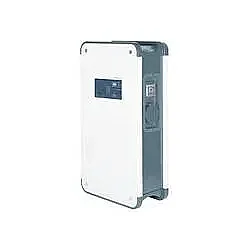
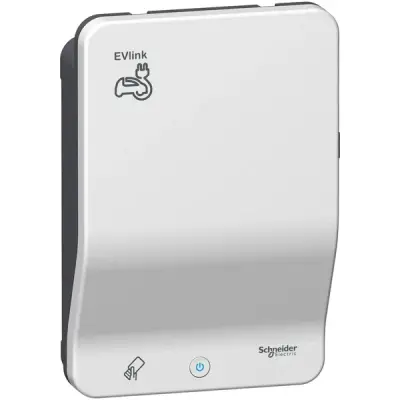
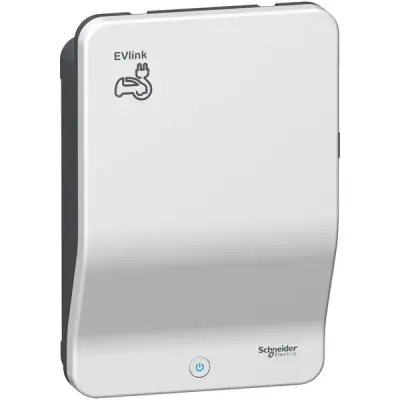
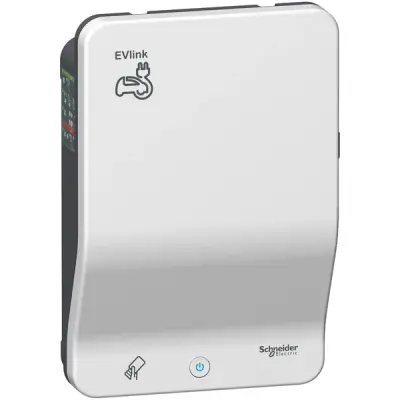
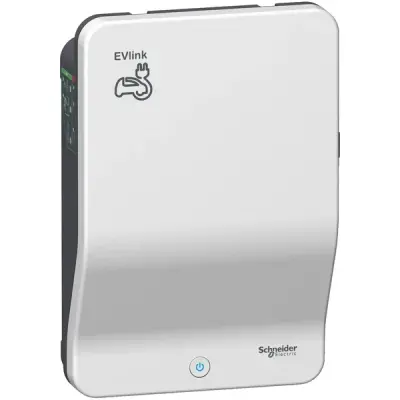
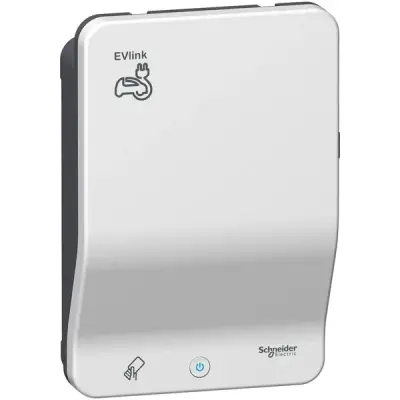
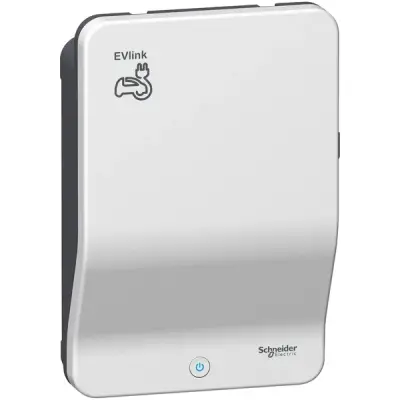
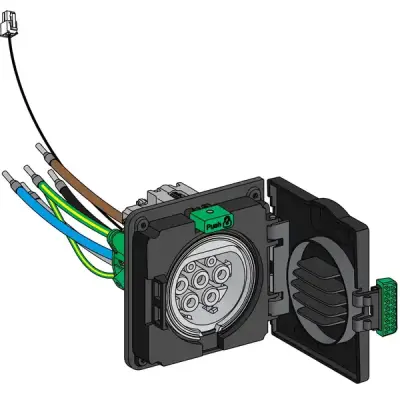
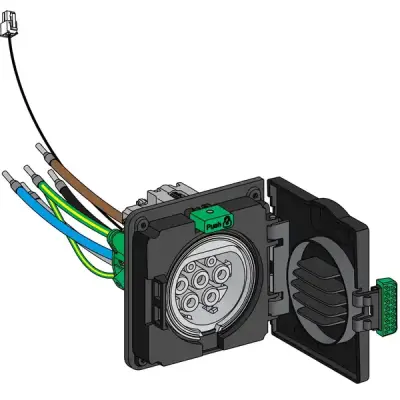
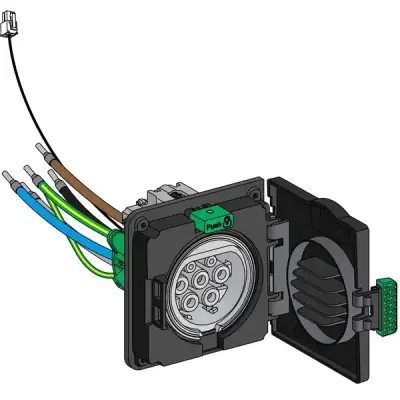
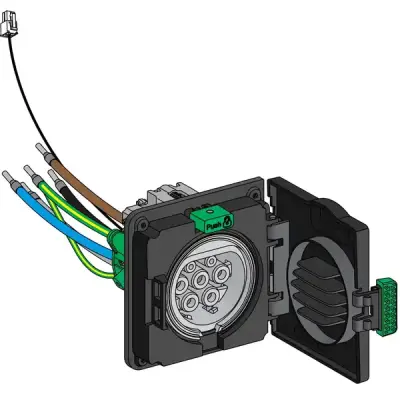
Electric vehicle charging stations at DAS Company cover the complete AC charging power range — from 7.2kW single-phase residential wallboxes for overnight home charging, through 11kW and 22kW three-phase units for workplace fleet charging and commercial car park installations, to dual-port commercial pedestals serving two vehicles simultaneously. All units carry CE marking and IEC 61851-1 (Mode 3 AC charging) and IEC 62196-2 (Type 2 connector) certification for European market installation — the mandatory standards for EV charging equipment sold and installed in EU member states. Type 2 is the European standard connector: universally compatible with Tesla Model 3/Y/S/X, BMW i-series, Mercedes EQ series, Audi e-tron, VW ID series, Hyundai Ioniq, Kia EV6, Polestar, Porsche Taycan and all European and Chinese-market electric vehicles.
DAS Company supplies EV charging equipment for B2B installation projects — electrical contractors installing home wallboxes for developers and estate agents, facilities managers equipping workplace car parks, commercial property owners meeting EU AFIR obligations, and smart home integrators adding EV charging to BTicino MyHome, ABB free@home or KNX smart home installations. As a full-range electrical distributor, DAS Company provides both the EV charging station and the complete electrical infrastructure required for installation — MCBs, RCDs, cable, cable management and electrical accessories — from a single supplier.
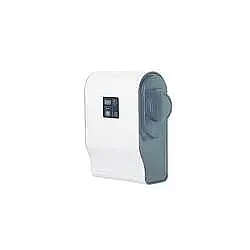

The 7.2kW single-phase Type 2 wallbox (230V, 32A) is the standard residential EV charging solution — the fastest AC charging rate available on a standard single-phase 230V domestic supply without electrical infrastructure upgrade. A 60kWh battery vehicle (typical of mainstream EVs in 2024–2025) charges fully from empty in approximately 8–9 hours on a 7.2kW wallbox — overnight charging that is complete before the morning commute. Compared to a standard 2.3kW domestic 3-pin socket (13A, Mode 2 cable), a 7.2kW wallbox charges three times faster and uses Mode 3 controlled charging (dedicated EV charging circuit with communication between charger and vehicle) that manages charging current safely, respects the vehicle's battery management system limits and provides earth fault and overcurrent protection that a domestic socket cannot provide. Installation requires a dedicated 32A MCB on the consumer unit, 6mm² cable to the wallbox mounting position and typically a Type A or Type A + 6mA DC RCD for earth leakage protection — DAS Company supplies all installation components alongside the wallbox. Smart wallbox variants add Wi-Fi or Bluetooth connectivity for smartphone app control, scheduled off-peak charging (charging at night-rate electricity tariff times automatically), real-time energy consumption monitoring and RFID card access restriction for shared driveways.
The 11kW three-phase wallbox (400V, 16A per phase) and 22kW three-phase wallbox (400V, 32A per phase) provide significantly faster charging for workplace fleet management, commercial car parks, hotels and apartment blocks where vehicles may be parked for shorter durations and must charge to useful range quickly. A 22kW charger charges a 60kWh battery in approximately 2–3 hours — suitable for typical office working day dwell times and hotel overnight stays. Three-phase power at 400V is standard in most European commercial buildings and industrial properties; residential properties in some European countries (including many in Eastern Europe and the Balkans) also have three-phase supply available at the meter — enabling 22kW home charging where the property's electrical infrastructure supports it. The vehicle's onboard AC-DC converter (onboard charger) limits maximum charging speed regardless of the wallbox output: a vehicle with a 7.4kW onboard charger charges at maximum 7.4kW from a 22kW wallbox — the wallbox power rating is the ceiling, not the guaranteed rate. Most current EVs support 11kW three-phase as standard; 22kW onboard chargers are less common but available on models including Renault Zoe and certain fleet-oriented variants.
OCPP (Open Charge Point Protocol) is the open communication standard between EV charging stations and Charge Point Operator (CPO) management software — enabling remote monitoring, control and billing of charging sessions from a central platform, regardless of charger manufacturer. OCPP 1.6J is the current widely deployed version — covering remote start/stop, RFID authorisation, energy metering, fault reporting and firmware update over the air. OCPP 2.0.1 is the current certified version adding ISO 15118 Plug & Charge support (vehicle automatically authenticates and starts charging without RFID card or app), enhanced security, smart charging profiles and V2G (Vehicle-to-Grid) readiness. For commercial installations where the charger must be managed by a third-party CPO platform (fleet management system, workplace charging billing platform, public charging network), OCPP compliance is mandatory — a non-OCPP charger cannot be remotely managed or monetised. All commercial EV charging units at DAS Company carry OCPP 1.6J certification as standard, with OCPP 2.0.1 available on current-generation commercial models.
Dynamic Load Balancing (DLB) is the essential feature for multi-charger installations where simultaneous EV charging would exceed the building's main electrical supply capacity. Without DLB, a site with a 63A three-phase supply and three 22kW chargers would trip the main breaker if all three vehicles charged simultaneously at full rate. DLB solves this by connecting a CT clamp to the main electrical supply cable — monitoring total building consumption in real time and automatically reducing each charger's output when total load approaches the supply limit, then increasing charger output when building load reduces. DLB eliminates the need to upgrade the main electrical supply to accommodate EV charging at many existing sites — the most significant installation cost saving in commercial EV charging infrastructure projects. DLB is essential for workplace, apartment block, hotel and car park installations where multiple chargers will operate simultaneously, and is increasingly required by electrical contractors as a condition of new EV installation designs.
Solar-integrated EV charging is one of the fastest-growing segments in the residential and commercial charging market — using photovoltaic generation to charge the vehicle rather than grid electricity, reducing charging cost to near-zero during daylight generation hours. Smart EV wallboxes with solar integration monitor the building's solar PV export (via CT clamp or direct inverter communication) and automatically increase EV charging current when solar generation exceeds building consumption — using surplus PV energy that would otherwise be exported at low feed-in tariff rates. ECO charging modes (slow, fast and ECO+ variants) allow the homeowner or fleet manager to configure the charging behaviour priority: maximum solar self-consumption (ECO), minimum charging time (Fast) or balanced grid/solar combination (ECO+). Solar-integrated charging is complementary to BTicino MyHome, ABB free@home and KNX smart home systems that DAS Company also supplies — the smart home energy management system can incorporate EV charging into whole-home energy orchestration, coordinating EV charging with HVAC, hot water and battery storage to minimise grid import across all building loads simultaneously.
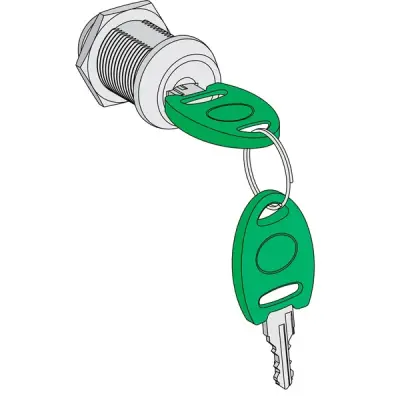
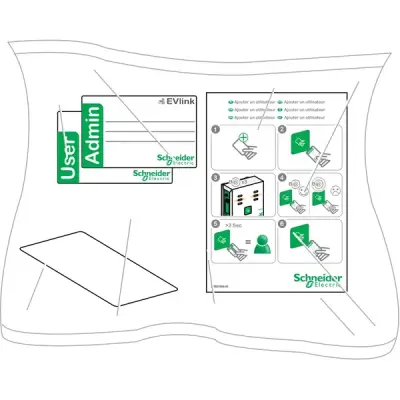
RFID access control restricts EV charging station use to authorised users — preventing unregistered vehicles from occupying charging points and enabling usage tracking for billing and fleet management. RFID-equipped wallboxes supply a set of RFID cards at purchase; additional RFID cards are registered through the charger management app or OCPP platform. For commercial billing installations — workplace charging where employees are billed per kWh, hotel charging offered to paying guests, or public car park charging with session-based tariffs — the charger must support OCPP remote authorisation (the OCPP backend server validates the RFID card and authorises the session) and MID-certified energy metering (MID — Measuring Instruments Directive — certified metering is legally required for commercial charging transactions where the customer pays per kWh). DAS Company's commercial EV charging units include MID-certified metering for billing-compliant installations.
The EU Alternative Fuels Infrastructure Regulation (AFIR, EU 2023/1804) and the revised Energy Performance of Buildings Directive (EPBD) impose mandatory EV charging infrastructure requirements on new and renovated commercial buildings from 2025 — including minimum percentages of car parking spaces pre-wired or equipped for EV charging, minimum numbers of active charging points in workplace and commercial car parks, and EV charging readiness requirements for new residential buildings. For property developers, commercial building owners and facilities managers in EU member states, EV charging infrastructure is no longer optional but a regulatory compliance requirement — driving significant demand for B2B EV charging equipment supply to the electrical contractor and property development sector. DAS Company provides B2B pricing for EV charging equipment at the quantities required for new-build residential developments, commercial car park retrofits and workplace fleet charging installations.
A complete EV charging installation requires more than the wallbox — the dedicated electrical circuit from the consumer unit or sub-distribution board to the charger mounting point requires a dedicated MCB (Type B 32A for 7.2kW, Type B 32A three-phase for 22kW), an appropriate RCD (Type A + 6mA DC for compliance with IEC 62752 charging cable protection requirements in most installations), 6–10mm² cable (gauge determined by circuit length and route), appropriate cable management (conduit, cable tray or trunking to the mounting point) and weatherproof cable glands at the charger entry. DAS Company supplies the complete installation material package — Himel, LS Electric or ABB MCBs and RCCBs, Prysmian or Nexans installation cable, IBOCO conduit and cable management, and the EV wallbox itself — allowing electrical contractors to order the complete installation bill of materials from a single B2B supplier rather than splitting the order across separate electrical wholesale and EV charging specialist accounts.
DAS Company provides competitive B2B pricing for EV charging stations for electrical contractors, property developers and facilities managers across Europe. Product categories with available pricing include 7.2kW single-phase residential wallboxes (standard, smart Wi-Fi and RFID variants), 11kW three-phase wallboxes, 22kW three-phase wallboxes (single and dual port), commercial pedestal units with dual connectors and OCPP 2.0.1 remote management. Volume pricing is available for development projects requiring multiple identical units — typically 5+ units for residential development supply and 2+ units for workplace and commercial installations. Contact our sales team for project quantity pricing and complete installation material package quotations including MCBs, RCCDs and cable for each charging point.
Residential new build — 7.2kW wallboxes for individual homes and apartments, meeting EPBD pre-wiring requirements. Workplace fleet charging — 22kW three-phase wallboxes with DLB and RFID for employee vehicle charging with cost allocation. Hotel and hospitality — 11kW and 22kW wallboxes with OCPP billing for guest EV charging as a paid amenity. Apartment blocks — DLB-managed multi-charger installations within shared building electrical supply limits. Commercial car parks — dual-port 22kW pedestals with OCPP 2.0.1 remote management for public charging network integration. Smart home integration — solar-integrated wallboxes coordinated with BTicino MyHome, ABB free@home or KNX home energy management systems for whole-home energy optimisation.
Contact DAS Company for EV charging station pricing, dynamic load balancing system design for multi-charger installations, complete installation material packages and volume pricing for residential development and commercial EV charging projects across Europe.