KNX (formerly EIB — European Installation Bus) is the international open standard for home and building automation, certified under EN 50090 and ISO/IEC 14543, and the only global building automation protocol adopted as a worldwide standard by all major international standards bodies. With over 500 certified manufacturers producing more than 7,000 interoperable certified KNX products, KNX is the professional-grade building automation standard of choice for architects, electrical engineers and system integrators working on projects from premium residential apartments to multi-storey commercial office buildings, hotels, schools and hospitals across Europe — and has been for over 30 years.
The fundamental technical distinction that makes KNX the professional standard — and distinguishes it from proprietary smart home platforms (BTicino MyHome, ABB free@home, Philips Hue, consumer IoT systems) — is its decentralised intelligence architecture. In a KNX system, each device has its own microprocessor, so no central control station is required — senso rs send telegrams directly to actuators over the KNX bus, and each actuator executes its programmed response independently. A lighting dimmer actuator continues functioning if the building's network switch fails; a blind actuator continues responding to its paired push-button if the KNX IP gateway is restarted. This decentralised reliability is the reason KNX is specified for hotel room control, hospital ward management, commercial office buildings and infrastructure where system downtime is unacceptable.
A KNX system consists of sensors, actuators, system devices and a two-wire bus cable (KNX TP — Twisted Pair) that connects all devices in a daisy-chain or star topology and provides both data communication and 30V DC bus power to sensors and small devices simultaneously. Sensors such as thermostats, switches or wind gauges generate commands in the form of telegrams, which are turned into actions by actuators — switching relays for blinds or lighting. A two-wire bus line provides the connection between sensors and actuators, significantly reducing the amount of wiring compared to conventional installations.
In a conventional building — without KNX — every light switch requires a cable run to the ceiling light it controls; every room thermostat requires a cable to the HVAC valve it operates; every blind switch requires a cable to the blind motor it drives. In a KNX building, every device connects to the same two-wire bus — a push-button sensor on the wall connects to the bus, an actuator in the electrical panel connects to the bus, and the ETS software creates the logical association between push-button and actuator. The result is a dramatic reduction in wiring (the installation cable cost saving on a 50-room hotel can be substantial) and a building that can be re-programmed without rewiring — changing which switch controls which light is a software change in ETS, not an electrician re-termination.
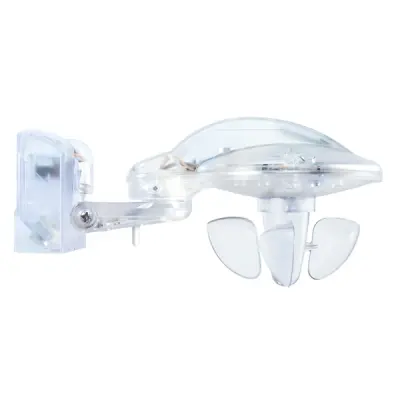
KNX sensors are the input devices that detect user intent, environmental conditions and building state, and generate the KNX bus telegrams that drive actuator responses. Push-button sensors (1-gang to 8-gang wall-mount) are the most numerous sensor type — each button is freely programmable in ETS to send any KNX group address, enabling a single push-button panel to control lighting, blinds, HVAC mode and scene activation simultaneously from one elegant wall plate. Push-button sensors from ABB i-bus KNX, Siemens GAMMA, JUNG LS and Gira are available in design ranges matching the building's interior specification — glass, metal, synthetic and premium finishes with customisable labelling and LED status indicators. Presence (occupancy) detectors (ceiling-mount, 360° detection, configurable sensitivity and hold time) provide automatic lighting control, HVAC economy mode when rooms are unoccupied, and access monitoring — the highest-value energy-saving function in commercial office and hotel room KNX systems, eliminating the energy waste of lighting and HVAC running in unoccupied spaces. Room climate sensors (temperature, humidity, CO₂, VOC air quality) feed HVAC actuators for demand-controlled ventilation — increasing fresh air delivery when CO₂ rises above threshold and reducing energy waste when air quality is already acceptable. Weather stations (wind speed, rain detection, global radiation sensor) provide the inputs for automated solar shading control — closing blinds when solar irradiance exceeds comfort threshold, opening them at night, and overriding closing when wind speed exceeds safe blind motor operating limits.
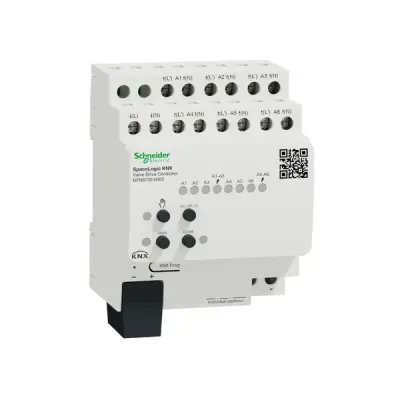
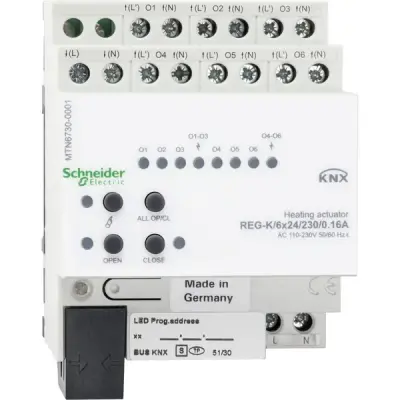
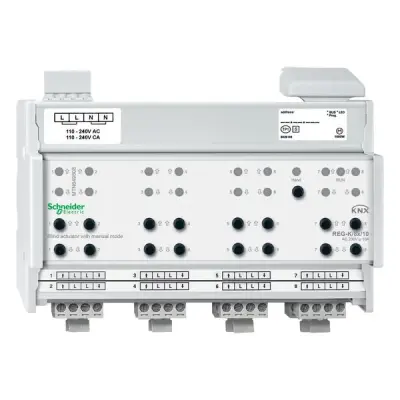
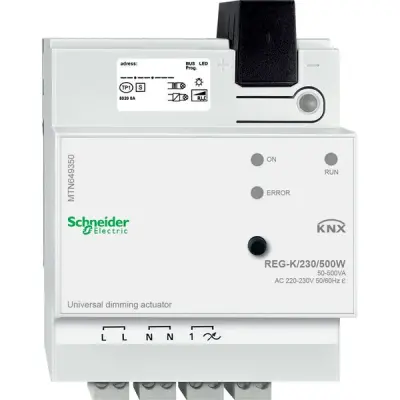
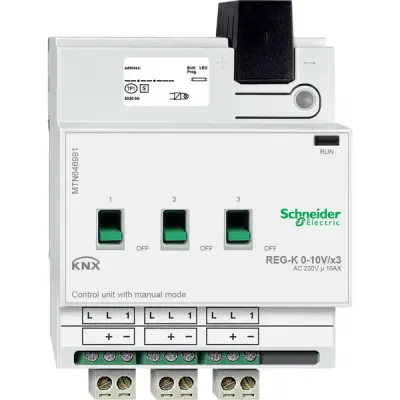
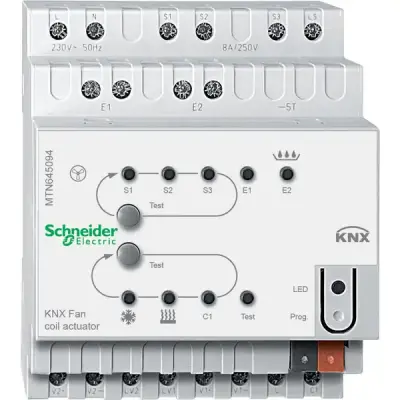
KNX actuators are the output devices that execute commands received from sensors — switching, dimming and controlling the physical loads that create the building environment. Switch actuators (4, 8, 12 and 16-channel, DIN-rail mount) provide the relay-switched outputs for lighting circuits, socket circuits, heating mats and other on/off loads — a single 12-channel switch actuator in the distribution board replaces twelve individual control cables to twelve separate relay controls in a conventional installation. Dimming actuators (trailing-edge, leading-edge and universal dimmer, 1-4 channels) provide phase-controlled dimming of dimmable LED, CFL and halogen lamps — connected to the KNX bus and controlled by push-button dimmer commands or by presence detector automatic daylight-linked dimming. Shutter/blind actuators (2 and 4-channel, for motors up to 230V AC 6A) drive roller blind, venetian blind, awning and curtain motors — receiving up/down/stop commands from push-button sensors and automatic positioning commands from solar tracking algorithms in the ETS application. Room climate controllers and valve actuators (220/230V AC and 24V DC variants, for 2-pipe and 4-pipe fan coil units, underfloor heating manifold valves and chilled ceiling systems) provide the HVAC output layer — controlling room temperature via the KNX thermostat setpoint and presence detector inputs to minimise energy consumption while maintaining comfort.
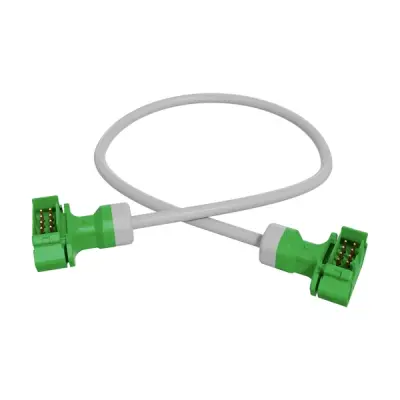
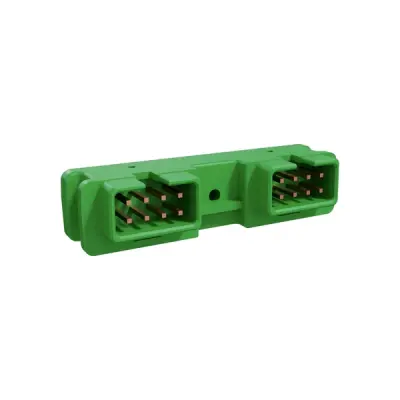
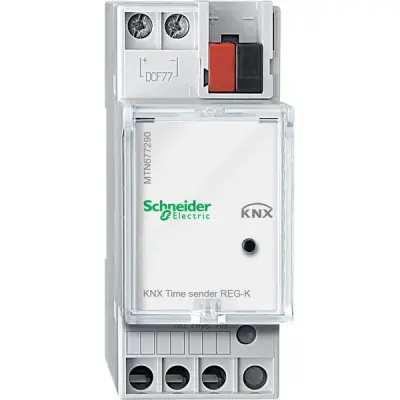
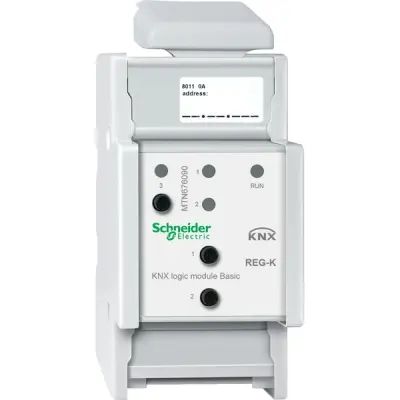
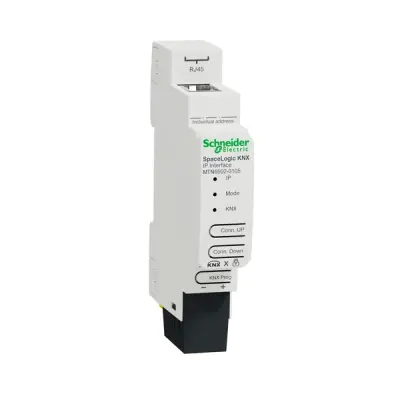
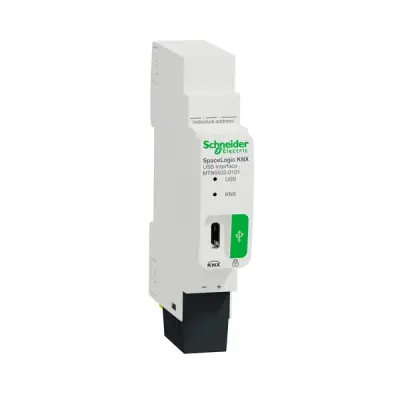
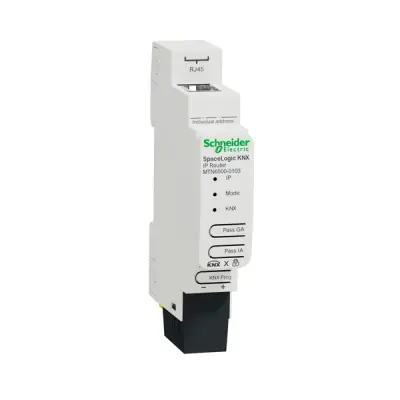
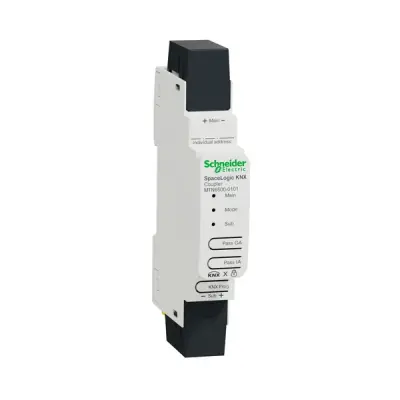
KNX system devices provide the infrastructure for the bus itself. The KNX power supply (typically 640mA or 1280mA, 30V DC SELV) provides bus power and data communication voltage for all connected devices on a bus line. Each KNX line supports up to 64 devices with one power supply; a KNX line coupler connects additional lines and provides data filtering between line segments, enabling large buildings to be structured into logical areas (floor, zone, function) with independent line power supply for reliability. The KNX IP router (KNXnet/IP) connects KNX TP lines to the building's IP Ethernet network — enabling remote commissioning via ETS over IP, visualisation from IP-connected touchscreens and integration with IP-based building management systems. The KNX IP router also provides the backbone for large multi-line systems where high-speed telegram transfer between areas is required. A KNX USB interface connects a laptop directly to the KNX TP line for local ETS commissioning and diagnostics without an IP infrastructure.
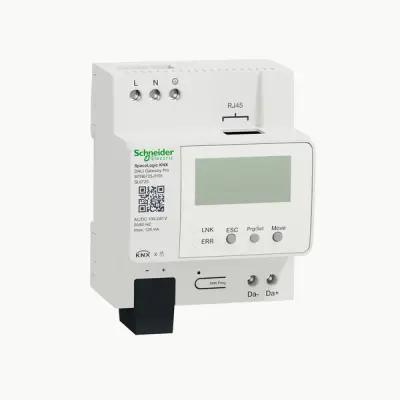
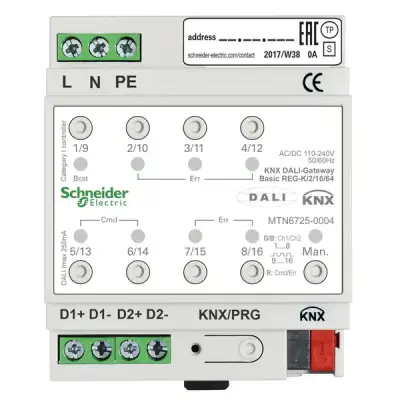
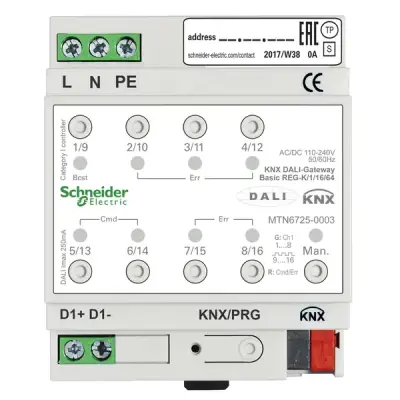
KNX gateways translate between the KNX bus protocol and external systems — extending the KNX building automation into the complete range of related building technologies. KNX-DALI gateways integrate DALI-2 (Digital Addressable Lighting Interface) LED driver and luminaire control into the KNX system — enabling individual luminaire addressability, emergency lighting monitoring and tunable white (colour temperature) control alongside the circuit-level KNX dimming control. KNX-Modbus RTU gateways connect KNX to industrial building equipment — VFDs, chillers, heat pumps, UPS systems and metering devices that expose Modbus RTU or Modbus TCP registers — enabling HVAC plant status monitoring and setpoint control from the KNX room control layer. KNX-BACnet gateways connect KNX room control installations to BACnet building management systems — the standard integration approach when KNX serves room control in a building managed by a BACnet BEMS at the plant level. Through KNX-IP gateways, KNX devices integrate with Google Home, Amazon Alexa, or Apple HomeKit — enabl ing voice control and smartphone app access to KNX-controlled lights, blinds and HVAC without replacing the underlying KNX infrastructure with a consumer ecosystem.
ETS (Engineering Tool Software) is the KNX Association's official commissioning and programming environment — the single tool used to configure all KNX certified devices, regardless of manufacturer, in one unified project. ETS is the reason KNX is a professional installation standard: it requires trained, certified installers who understand group address assignment, device parameter configuration and system testing — the commissioning knowledge that proprietary app-configured consumer smart home systems do not require and cannot replicate in functionality depth. KNX device manufacturers publish ETS product databases containing the device parameters and group object definitions for each product — downloaded from the ETS Online Catalog and imported into the project. The KNX Association offers KNX training and certification (KNX Basic, Advanced and Tutor levels) that qualifies installers to commission KNX systems professionally and access the full ETS feature set. DAS Company provides guidance on ETS licence procurement and KNX certification training programme access for electrical contractors expanding into KNX building automation.
EN 15232 (Energy Performance of Buildings — Impact of Building Automation) defines four Building Automation and Control System (BACS) efficiency classes (A through D) that quantify the energy saving potential of different levels of building automation sophistication. Class A (High Energy Performance BACS) — achievable with professional KNX systems incorporating presence-controlled lighting, demand-controlled ventilation, optimised HVAC start/stop and occupancy-linked room temperature setback — delivers the highest energy efficiency. KNX products provide energy savings potential up to efficiency class A according to the BACS Energy Performance Classes EN 15232. For co mmercial building owners and developers targeting EU Energy Performance Certificate ratings and BREEAM or LEED certification, a KNX BACS installation is a documented route to improving the building's energy performance classification — with the EN 15232 class A designation providing a legally recognised energy efficiency evidence basis for planning applications and building certification schemes.
KNX supports four physical transmission media, each suited to different installation contexts. KNX TP (Twisted Pair) is the standard installation medium — J-Y(St)Y 2×2×0.8mm data cable that runs alongside the power wiring, providing reliable 9600 baud data communication and 30V DC bus power in a single cable. TP is the default for new-build installations. KNX IP (Ethernet) uses the building's existing IT network as a KNX backbone — connecting KNX line segments over the IP infrastructure for large multi-building or multi-floor systems where running new TP backbone cable is impractical. KNX RF (Radio Frequency) enables wireless KNX device integration — battery-powered push-button sensors, wireless thermostats and radio-controlled actuators that retrofit into existing buildings without new bus cable installation. KNX RF is the preferred medium for listed building renovation, residential retrofit and historic building smart system integration where cable installation is disruptive or architecturally unacceptable. KNX PL (Powerline) communicates via the existing 230V mains wiring — applicable in specific retrofit scenarios where neither TP nor RF is practical.
DAS Company provides access to current KNX device pricing for certified KNX installers and building automation system integrators across Europe. Product categories with available pricing include push-button sensor panels (by gang count and design range), presence and motion detectors, room climate sensors, switch actuators (by channel count), dimming actuators, shutter/blind actuators, room climate controllers, KNX power supplies and line couplers, KNX IP routers and USB interfaces, and KNX-DALI and KNX-Modbus gateways. Contact our engineering team for complete KNX system bills of materials, ETS product database access guidance and project pricing for hotel, office and residential KNX installations across Eastern Europe.
Premium residential — KNX TP new-build with lighting scenes, motorised shading, underfloor heating control and voice assistant integration for apartments and villas. Hotels and hospitality — KNX room control units (RCU) for guest room lighting, blind, HVAC and door lock control with energy efficiency room vacancy setback. Commercial offices — presence-linked lighting control, demand-controlled ventilation, meeting room booking-integrated HVAC and EN 15232 Class A energy efficiency certification. Schools and education — daylight-linked classroom lighting control, ventilation management and centralised energy monitoring. Listed buildings and retrofit — KNX RF wireless push-button sensors and actuators for retrofit smart control without cable installation. Hospitals and healthcare — KNX room control with reliability requirements met by decentralised bus intelligence and redundant bus line topology.
DAS Company supplies KNX devices alongside the complete electrical installation infrastructure — cable, MCBs, distribution boards, lighting and HVAC components — enabling KNX installers to source both the bus system components and the associated conventional installation materials from a single B2B account. KNX project support includes bill of materials preparation from system design, ETS licence and product database guidance, and application engineering consultation for specific room control, HVAC integration and gateway interface requirements. Contact our engineering team for KNX project supply quotations and installation material packages for Eastern European building automation projects.
Contact DAS Company for KNX device pricing, complete system bill of materials preparation, ETS commissioning tool guidance and KNX installation project supply for residential, hotel and commercial building automation across Europe.